Can a 1 Month Old Baby Start Teething
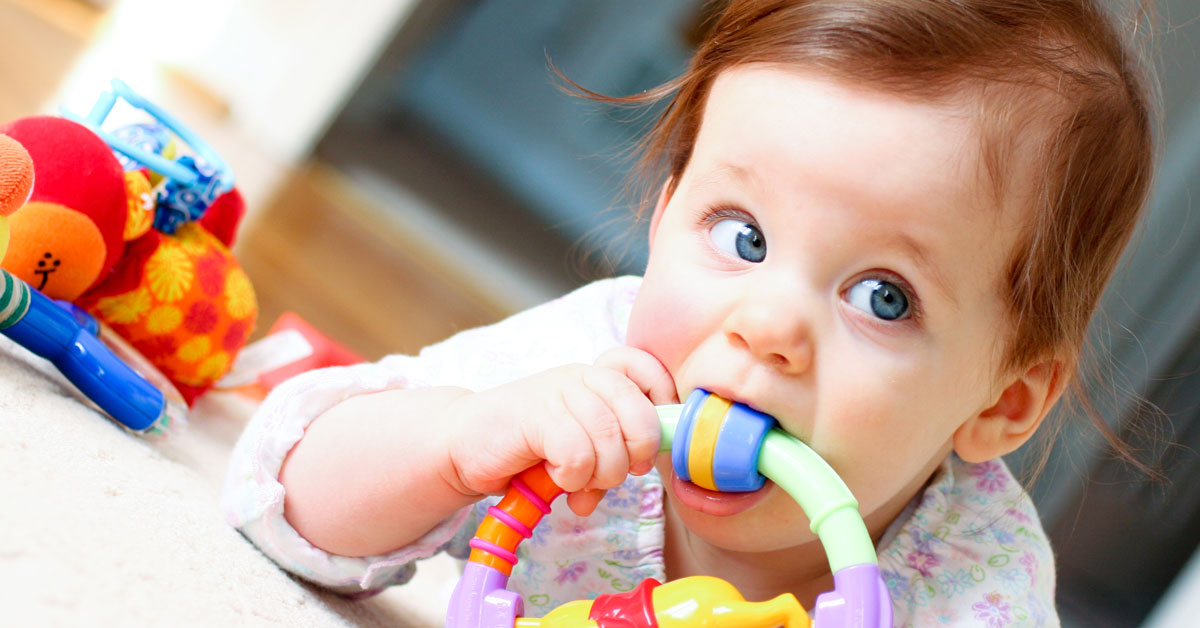
Teething can be a time of great frustration for caregivers, in this post I will list some of the near common symptoms, explicate how they relate to teething and share some insight on how to help soothe your little one during this potentially uncomfortable time.
When Does Teething Brainstorm for Infants?
Teething commonly starts around four to eight months with the lower front teeth and continues until 30-36 months of age when the final prepare of molars appear. During the teething period there are symptoms that include irritability, disrupted sleep, swelling or inflammation of the gums, drooling, loss of ambition, rash around the mouth, mild temperature, diarrhea, increased bitter and gum-rubbing and even ear-rubbing. These symptoms were reported by seventy-eighty percent of parents according to an article from the British Dental Journal. So, why don't all infants experience teething symptoms? Keep reading to find out.
Why Teething Symptoms May Be Confused with Cold Symptoms
Inquiry has pointed out that teething begins around six months of age. This is the same time when an infant's immunities they received from their mother, via the placenta, are diminishing. This ways that the infant's own immune organization is becoming established. During this time, infants become vulnerable to minor infections. Considering these ii changes are taking identify, the symptoms of teething can be confused with a minor illness or cold and visa versa. This explains why just 70-80 percent of parents reported teething symptoms of their baby; it's very likely that parents of the remaining 20-30 percentage associated the symptoms to a minor illness or cold.
Beneath is a list of normally reported teething symptoms, with means to help your infant at domicile and when to call the medico:
- Irritability
- Drooling/Skin Rashes
- Cough
- Biting and Gnawing
- Low Grade Fever
- Cheek rubbing and ear pulling
- Diarrhea
Irritability
This is acquired by the discomfort of the teeth erupting through the gums. Often the first teeth and molars are the almost uncomfortable.
How to help your infant's irritability: Caress, cuddle, cuddle! Every babe tin can use some adept cuddle time when they are having a hard time with teething. The extra time spent with your baby can help convalesce their hurting, by providing feelings of being comforted and reassured.
Drooling/Pare Rashes
Teething tin can stimulate drooling and many babies drool a lot!
How to help your infant'due south drooling: Excessive drooling tin can cause a rash effectually the mouth, cheeks, chin and neck area due to the extra bacteria on the peel from the saliva. Endeavour to keep the expanse as clean and as dry every bit possible by periodically wiping the surface area. Applying a simple bulwark cream tin aid with the dry out, chapped and sore skin.
Coughing
The extra saliva produced during teething can cause an occasional cough or gag.
How to aid your infant's coughing: If your baby's coughing continues or is accompanied past a high fever and cold or influenza symptoms, contact your babe's pediatrician. The high fever with common cold and influenza symptoms is not related to teething, merely is actually a sign that your infant is ill.
Biting and Gnawing
The counter force per unit area from biting on practically anything can alleviate the pressure from under the gums.
How to assistance your infant's bitter and gnawing:Anything cold works great! My best friend mixes water with the pouches of baby nutrient and freezes them to make fruit and veggie popsicles. In that location are teething rings, chew beads and any commercially bought teething toys can help, particularly when chilled or frozen.
Low Grade Fever
A low course fever is defined and acquired by the following:
- A temperature ranging from 98-100 degrees.
- It tin exist acquired by an baby putting their unclean hands in their oral cavity.
If the fever reaches above 101 degrees or continues, contact your baby's pediatrician because it may not be the teething simply a more serious disease.
How to help your babe's low form fever: Utilise an age-appropriate pain medication and please consult your infant'south pediatrician and the medication label for correct dosage.
Cheek rubbing and ear pulling
This is caused past pain in the gums, which can travel to the cheek and ear, specially when the molars are erupting. Infants will rub those areas. Keep in heed that ear pulling or rubbing tin can also be a sign of an ear infection, please contact your babe's pediatrician if this symptom continues or is accompanied with a loftier fever.
How to help your babe's cheek rubbing and ear pulling: Try rubbing and massaging the gums with a make clean finger for one to two minutes to help with the discomfort.
Teething and Diarrhea
Many believe that the increased saliva produced during teething can cause stool to become slightly loose.Proceed in mind, diarrhea tin be a sign of a more serious infection and then contact your baby's pediatrician if the stool becomes watery, because your infant could be at take a chance for aridity. Contacting your infant's pediatrician is particularly important if the diarrhea is accompanied by vomiting or a loftier fever.
I hope the list of symptoms and ways you lot tin can help your baby volition guide you lot through your infant's teething phase. I also hope this helps ease the potential stress experienced by many parents. Just think, that many symptoms nosotros recall are teething can be associated with illness, may exist completely unrelated to teething and may need to be addressed by a physician.
Related Content
- Tips for Teething Pain: What's Safe—and What's Not
- Amber Beads: Pretty to Wait at, Just is information technology Safe?
- Your Child's Smile Starts with Healthy Teeth
- Ensuring Lifelong Oral Health
Source: https://www.chla.org/blog/rn-remedies/your-infant-teething-know-the-signs-and-symptoms

Post a Comment for "Can a 1 Month Old Baby Start Teething"